SystemServer系统服务启动
SystemServer进程用来在创建系统服务,比如AMS、WMS、PMS等。熟悉一下Android系统服务的启动流程。总的启动时序图如下:
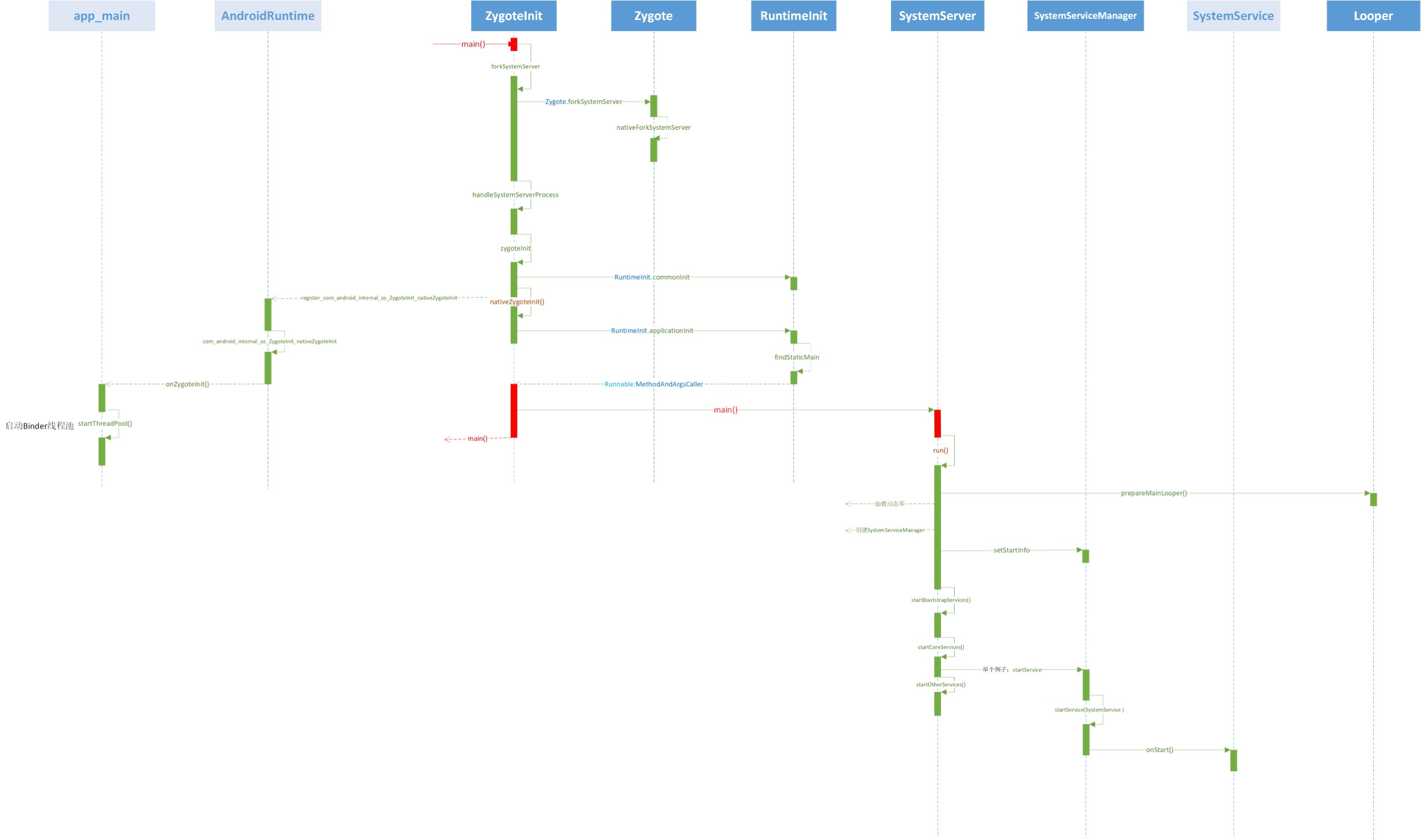
接着《Zyoget进程的启动》,同样在ZygoteInit的main方法中:
@UnsupportedAppUsage
    public static void main(String argv[]) {
        ...
        try {
            zygoteServer = new ZygoteServer(isPrimaryZygote);
            if (startSystemServer) {
                Runnable r = forkSystemServer(abiList, zygoteSocketName, zygoteServer);
                if (r != null) {
                    r.run();
                    return;
                }
            }
        }
        ...
    }
调用Runnable forkSystemServer(String abiList, String socketName,ZygoteServer zygoteServer)方法
/**
     * 为SystemServer进程准备参数和派生。
     */
    private static Runnable forkSystemServer(String abiList, String socketName,ZygoteServer zygoteServer) {
        pid = Zygote.forkSystemServer(
                    parsedArgs.mUid, parsedArgs.mGid,
                    parsedArgs.mGids,
                    parsedArgs.mRuntimeFlags,
                    null,
                    parsedArgs.mPermittedCapabilities,
                    parsedArgs.mEffectiveCapabilities);
        ...
        /* 对于子进程 */
        if (pid == 0) {
            if (hasSecondZygote(abiList)) {
                waitForSecondaryZygote(socketName);
            }
            zygoteServer.closeServerSocket();
            return handleSystemServerProcess(parsedArgs);
        }
        return null;
}接着调用Zygote静态方法forkSystemServer(),接着又会到Native层调用底层的nativeForkSystemServer方法fork出一个Server进程。
public static int forkSystemServer(int uid, int gid, int[] gids, int runtimeFlags,
            int[][] rlimits, long permittedCapabilities, long effectiveCapabilities) {
        ZygoteHooks.preFork();
        // Resets nice priority for zygote process.
        resetNicePriority();
        int pid = nativeForkSystemServer(
                uid, gid, gids, runtimeFlags, rlimits,
                permittedCapabilities, effectiveCapabilities);
        // Enable tracing as soon as we enter the system_server.
        if (pid == 0) {
            Trace.setTracingEnabled(true, runtimeFlags);
        }
        ZygoteHooks.postForkCommon();
        return pid;
}再回到主调用链上继续,forkSystemServer(String abiList, String socketName,ZygoteServer zygoteServer)方法返回Runnable通过:
return handleSystemServerProcess(parsedArgs);进入handleSystemServerProcess(ZygoteArguments parsedArgs)方法
/**
     * 完成新分支的SystemServer进程的剩余工作。
     */
    private static Runnable handleSystemServerProcess(ZygoteArguments parsedArgs) {
        // 将umask设置为0077,以便新文件和目录将默认为仅所有者权限。
        Os.umask(S_IRWXG | S_IRWXO);
        if (parsedArgs.mInvokeWith != null) {
            ...
        } else {
            ...
            /*
             * 将其余参数传递给SystemServer。
             */
            return ZygoteInit.zygoteInit(parsedArgs.mTargetSdkVersion,parsedArgs.mRemainingArgs, cl);
        }
        /* should never reach here */
}又回到ZygoteInit中的Runnable zygoteInit(...)方法
/**
     * The main function called when started through the zygote process. This could be unified with
     * main(), if the native code in nativeFinishInit() were rationalized with Zygote startup.
     */
    public static final Runnable zygoteInit(int targetSdkVersion, String[] argv,
            ClassLoader classLoader) {
        ...
        RuntimeInit.commonInit();
        ZygoteInit.nativeZygoteInit();
        return RuntimeInit.applicationInit(targetSdkVersion, argv, classLoader);
}RuntimeInit中的静态方法Runnable applicationInit(int targetSdkVersion, String[] argv,ClassLoader classLoader)
protected static Runnable applicationInit(int targetSdkVersion, String[] argv,
            ClassLoader classLoader) {
        ...
        return findStaticMain(args.startClass, args.startArgs, classLoader);
}findStaticMain方法用来查找SystemServer类的class,并包装到MethodAndArgsCaller中返回该对象:
/**
     * 在类“ className”上调用静态“ main(argv [])方法。
     * 将各种失败的异常转换为RuntimeException,并假设它们随后将导致VM实例退出。
     *
     */
    protected static Runnable findStaticMain(String className, String[] argv,
            ClassLoader classLoader) {
        ...
        Method m;
        ...
        /*
         * This throw gets caught in ZygoteInit.main(), which responds
         * by invoking the exception's run() method. This arrangement
         * clears up all the stack frames that were required in setting
         * up the process.
         */
        return new MethodAndArgsCaller(m, argv);
}注意:以前的源码是直接抛出该类型的异常,在ZygoteInit.main()调用处捕获该异常并执行run()方法运行加载SystemServer。这样做的目的,源码注释也解释的很清楚:此异常被ZygoteInit.main()捕获,该异常通过调用异常的run()方法进行响应。 这种安排清除了设置过程所需的所有堆栈框架。虽然代码该成了return,但是注释还在。
回到ZygoteInit.main()方法中,果然是调用run()方法。
Runnable r = forkSystemServer(abiList, zygoteSocketName, zygoteServer);
                if (r != null) {
                    r.run();
                    return;
}MethodAndArgsCaller类定义在RuntimeInit中,run()方法也没有特别的地方,就是通过反射调用SystemServer的main()方法运行。
static class MethodAndArgsCaller implements Runnable {
        /** method to call */
        private final Method mMethod;
        /** argument array */
        private final String[] mArgs;
        public MethodAndArgsCaller(Method method, String[] args) {
            mMethod = method;
            mArgs = args;
        }

        public void run() {
            try {
                mMethod.invoke(null, new Object[] { mArgs });
            } catch (IllegalAccessException ex) {
                throw new RuntimeException(ex);
            } catch (InvocationTargetException ex) {
                Throwable cause = ex.getCause();
                if (cause instanceof RuntimeException) {
                    throw (RuntimeException) cause;
                } else if (cause instanceof Error) {
                    throw (Error) cause;
                }
                throw new RuntimeException(ex);
            }
        }
}进入SystemServer的main()方法
/**
     * The main entry point from zygote.
     */
    public static void main(String[] args) {
        new SystemServer().run();
}调用类中的私有方法:run()这才是真正最终初始化系统中各种服务的方法。
private void run() {
        try {
            ...
            Looper.prepareMainLooper();
            // Initialize native services.
            System.loadLibrary("android_servers");
            // Debug builds - allow heap profiling.
            if (Build.IS_DEBUGGABLE) {
                initZygoteChildHeapProfiling();
            }
            // Check whether we failed to shut down last time we tried.
            // This call may not return.
            performPendingShutdown();
            // Initialize the system context.
            createSystemContext();
            // Create the system service manager.
            mSystemServiceManager = new SystemServiceManager(mSystemContext);
            mSystemServiceManager.setStartInfo(mRuntimeRestart,
                    mRuntimeStartElapsedTime, mRuntimeStartUptime);
            LocalServices.addService(SystemServiceManager.class, mSystemServiceManager);
            // Prepare the thread pool for init tasks that can be parallelized
            SystemServerInitThreadPool.get();
        }
        // Start services.
        try {
            traceBeginAndSlog("StartServices");
            startBootstrapServices();
            startCoreServices();
            startOtherServices();
            SystemServerInitThreadPool.shutdown();
        }
        ...
        // Loop forever.
        Looper.loop();
        throw new RuntimeException("Main thread loop unexpectedly exited");
    }
不难看到其中准备工作:
①MainLooper
②初始化SystemServiceManager,
③初始化系统Context
④加载各种系统服务(引导服务、核心服务和其它服务)
至此,Android系统的SystemServer启动完成。这其中也启动了很多熟知的关键服务,比如AMS,详细启动参考《AMS服务的启动》。